



Process Control, Automation, and PAT
Latest News
Advertisement
Latest Videos






Advertisement
More News
Next-gen antibody R&D is shifting to multifunctional modalities driven by manufacturing scale and regulatory acceleration.
Microfluidic rapid-testing advances enhance real-time QC, strengthen compliance, and speed contamination detection across modern biomanufacturing.

Automated facility upgrades for cell therapy enhance quality assurance, ensure regulatory compliance, and boost operational efficiency by minimizing manual risks.

Strategic AI integration in bio/pharma manufacturing enhances GxP compliance, quality, and operational efficiency through robust governance and risk management.

Leveraging computerized maintenance management systems software can enhance efficiency, improve quality control, ensure accurate documentation, and strengthen data integrity.
In the second half of an interview with Edwin Stone, PhD, CEO of Cellular Origins, Stone discusses how automation in CGT manufacturing can increase productivity without displacing human workers.
Edwin Stone, PhD, CEO of Cellular Origins, offers his unique perspective to the challenges facing CGT manufacturers, drawing on his background in robotics and life science automation.

Advances in automation technologies and bioprocessing equipment are driving fuller adoption of automation in biomanufacturing.
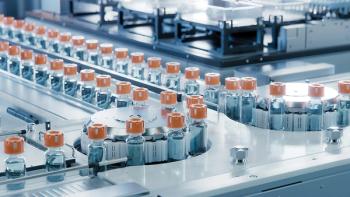
RNA modalities will especially benefit from fuller adoption of continuous manufacturing platforms.
BioPharm International® chatted with Preeya Beczek, managing director and co-founder of Beczek.COM, about industry trends from 2024 and which of those might impact the industry in 2025, including the big trend of AI.

Under the expanded distribution service, Distek’s BIOne Benchtop Controllers will now be made available across the UK and Ireland.
UK Biocentre and Azenta Life Sciences Partner on Sample Storage Capabilities for Biomedical Research
UK Biocentre will now utilize Azenta Life Sciences’ automated storage system, which gives the center storage capacity for more than 35 million biosamples.

Under the partnership, the companies will combine fully automated and digitalized technologies aimed at reducing CGT manufacturing timelines to 2.5 days.
The collaboration will combine Cytiva’s CGT manufacturing technologies with Cellular Origins' robotic manufacturing platform.
Nicolas Pivet, vice-president and general manager, Technology Solutions at Cytiva, discusses how automation benefits process development, particularly in the analytical space.
Lonza’s Synnafix has licensed its ADC technology to BigHat Biosciences, which will combine it with its ML design platform to generate newly designed ADCs.

The Novo Nordisk Foundation has committed DKK 600 million (US$87.4 million) towards the initial costs of the center housing the new supercomputer, which has the potential to accelerate drug discovery innovation.

Downstream processes may be streamlined by using automation.
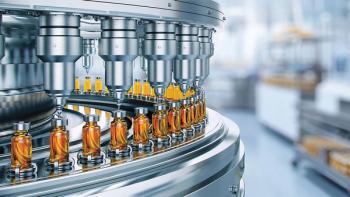
Automation technologies used in the development and manufacture of biopharmaceuticals continue to evolve, providing the potential for reduced costs and time.

Technological advances are aiding manufacturers to streamline aseptic processes and improve time-to-market.

CGT manufacturing processes need automation as well as standardization, according to Lonza’s Joe Garrity and Jerry Jiang.

Raphael Townshend, founder and CEO of Atomic AI, speaks on AI’s usefulness in characterizing molecular structure and advancing molecular engineering.
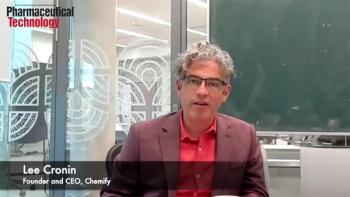
Chemify founder and CEO, Lee Cronin gives insight into the combination of digital chemistry, robotics, and AI in the drug discovery process.

Improved efficiencies and reduced costs are clear advantages of automating drug manufacturing processes.
Cellular Origins will apply its robotic platform to establish automated CGT manufacturing at CGT Catapult’s manufacturing innovation center in Stevenage, UK.
Advertisement
Advertisement