

Conference Coverage
about 13 hours ago
David Berry to Close AAPS PharmSci 360 on Pharma Entrepreneurshipabout 16 hours ago
How Lipid-Based Softgels Protect Oral Peptides from Degradationabout 1 month ago
Q&A with Dr. Jack Prior: Is Your Process Data Ready to Act On?Latest
Oct 26, 2026 | News
The BioPharm Brief: Survival Gains, a Modest ADC Win, and CAR-T in Multiple Sclerosis

David Berry to Close AAPS PharmSci 360 on Pharma Entrepreneurship
Oct 26, 2026

How Lipid-Based Softgels Protect Oral Peptides from Degradation
Oct 26, 2026

Merck and Kelun’s Sac-TMT Extends Survival by Nearly 7 Months in Pretreated Endometrial Cancer
Oct 26, 2026

BMS Reports Death in Phase 1 Zolacabtagene Autoleucel MS Study
Oct 26, 2026







Advertisement
Shorts

0:50
Cutting the Cost of Monoclonal Antibody Manufacturing
15 hours ago
by
Emily Schoenthaler(+1 more)
0:43
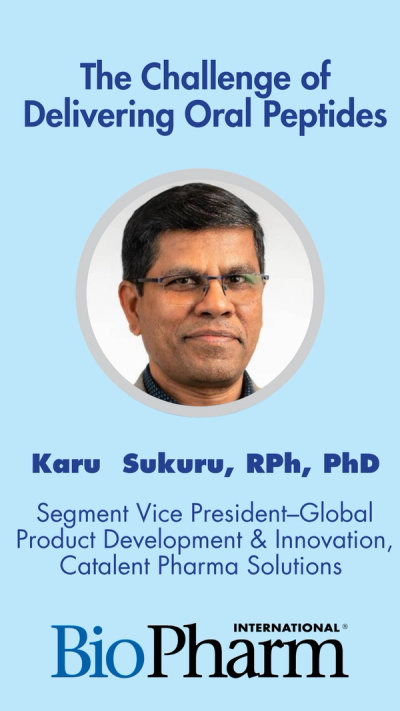
The Challenge of Delivering Oral Peptides
16 hours ago
by
Feliza Mirasol(+1 more)

0:49
Breakthrough Personalized mRNA Cancer Vaccine Results
3 days ago
by
Emily Schoenthaler

0:48
FDA Approves First-of-its-Kind Chronic Hepatitis B Treatment
4 days ago
by
Emily Schoenthaler
0:35
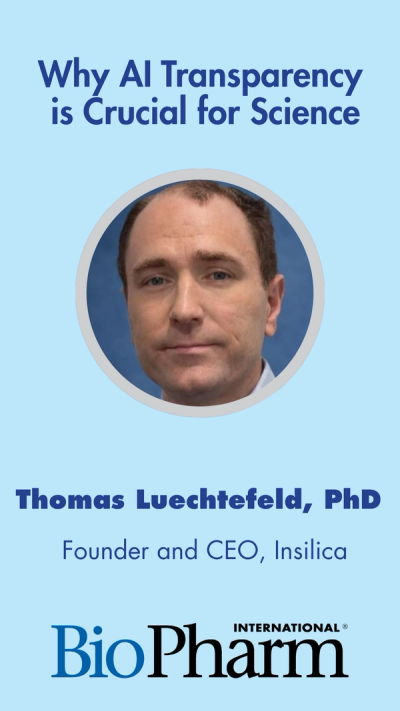
Why AI Transparency is Crucial for Science
6 days ago
by
Feliza Mirasol(+1 more)

0:50
The Future of Cancer Treatment: Why Biomarkers Matter
8 days ago
by
Emily Schoenthaler(+2 more)
1:11
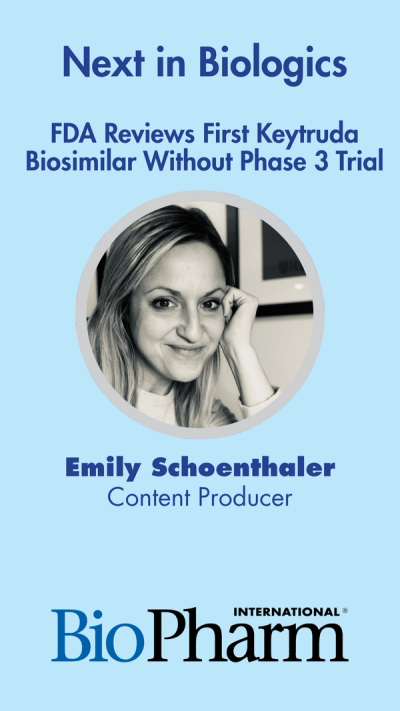
Next in Biologics: FDA Reviews First Keytruda Biosimilar Without Phase 3 Trial
12 days ago
by
Emily Schoenthaler

0:48
How Surrogate Endpoints Accelerate Patient Access to Innovation
18 days ago
by
Emily Schoenthaler(+2 more)

0:36
Why Amino-Acid Counting Decides Regulatory Fate
25 days ago
by
Feliza Mirasol(+1 more)

0:54
Why Basel is the Global Hub for Immune Engineering
a month ago
by
Feliza Mirasol(+1 more)
Analytics for Bispecific Antibody Product Release
Planning the analytical strategy for product release should be started as early as possible to ensure product quality and regulatory success.

FAQ: What You Need to Know About Analytical Method Validation
We answer readers’ top questions on limit of blank, limit of detection, limit of quantitation, acceptance criteria, and equivalence testing in analytical method validation.

Digital Standards Aim to Modernize Quality Assurance Without Compromising Confidence
As quality control labs move toward more connected, data-driven operations, digital technologies must be adopted in a way that upholds patient safety.

What FDA's AI Warning Letter Tells Us About GMP Accountability
An FDA warning letter to Purolea Cosmetics Lab shows that AI-assisted drafting can support documentation work only when the resulting document is subject to quality-system controls.

Expedited Regulatory Pathways for Biologics
This episode of the BioPharm Drug Digest will examine strategic triggers that have thus far won expedited regulatory review for biologics in development.

Videos




Advertisement
All News
Advertisement

BioNTech and DualityBio's HER2-directed ADC modestly improved progression-free survival over chemotherapy in DYNASTY-Breast02, but higher interstitial lung disease rates and an established competitor limit its potential in this setting.

Anurag Rathore, PhD, professor of chemical engineering at IIT Delhi, explains how his team is making antibody manufacturing more efficient and replacing costly raw materials to cut monoclonal antibody costs to about $10 per gram.

The Skyrizi approval pairs an interleukin-23 antibody with an on-body injector for 720 mg subcutaneous induction in adults, per phase 3 AFFIRM data.
Gilead agrees to acquire PepStar’s oral IL-23R peptide program for $1.275 billion, Zymeworks licenses its DLL3-targeted trispecific T-cell engager ZW209 to Roche, and the US Treasury proposes adding biotechnology to its outbound investment restrictions.

FNIH CEO Dr Julie Gerberding will open the October 25-28 meeting with a talk on using AI, adaptive trials, and alternative methods in drug development.
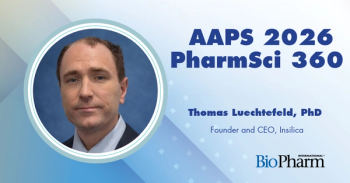
Insilica's Dr Thomas Luechtefeld argues process traceability, not benchmark accuracy alone, determines whether AI toxicology decisions can be trusted.

Phase 1 HCXT-2001, an oral macrocyclic IL-23R peptide, could be paired with emvistegrast as a daily oral IBD treatment, according to Gilead.

Roche gains exclusive global rights to ZW209, a DLL3×CD3×CD28 trispecific T-cell engager designed for CD28 co-stimulation. A phase 1 study in small cell lung cancer and other neuroendocrine tumors is underway.

A Treasury proposed rule would restrict certain US investments in biotechnology in China and other countries of concern, raising questions about how cross-border licensing and joint venture deals will be treated.
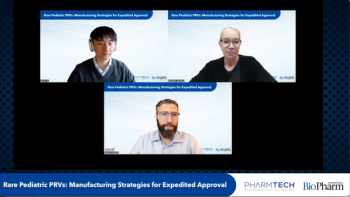
Nate Edwards of Arya Consulting moderates a discussion with Elisabeth Gardiner of Tevard Biosciences and Donny Xu of the RTW Institute about the regulatory and manufacturing hurdles facing rare disease drug developers.
Advertisement

Rohit Tripathi, vice president of industry strategy, consumer packaged goods, and manufacturing at RELEX Solutions, explains where cold-chain planning still breaks down and why biopharma supply chain leaders should use AI to act on data sooner, with humans making the final call.
The FDA grants accelerated approval to Ultomiris for IgA nephropathy, Alcon acquires Neurotech and its MacTel cell therapy for $550 million, and BioNTech and Bristol Myers Squibb add Trodelvy to a phase 3 trial in triple-negative breast cancer.

Zylidac will test whether optogenetic cell lines that hit 21 g/L in small-scale CHO runs can deliver higher-yield complex biologics at GMP scale.

Revakinagene taroretcel (Encelto), the only FDA-approved MacTel therapy, slowed photoreceptor loss by up to 54.8% vs sham in phase 3 trials.

BioNTech and Bristol Myers Squibb will replace chemotherapy with Gilead’s TROP2-directed ADC sacituzumab govitecan in the Phase 3 ROSETTA Breast-01 trial of PD-L1×VEGF-A bispecific pumitamig in PD-L1-low or -negative TNBC.
Advertisement
Advertisement
Trending on BioPharm International
1
Merck and Kelun’s Sac-TMT Extends Survival by Nearly 7 Months in Pretreated Endometrial Cancer
2
Treasury Proposes Adding Biotech to Outbound Investment Restrictions Under COINS Act
3
BMS Reports Death in Phase 1 Zolacabtagene Autoleucel MS Study
4
BioNTech’s HER2 ADC Hits Phase 3 Goal, but Companies See Limited Benefit
5