
New clinical data highlight advances in endocrine, metabolic, and rare disease drug development, with positive updates from MBX Biosciences, Gan & Lee Pharmaceuticals, and Novartis.
New clinical data highlight advances in endocrine, metabolic, and rare disease drug development, with positive updates from MBX Biosciences, Gan & Lee Pharmaceuticals, and Novartis.

Novartis announced that delpacibart braxlosiran met primary and key secondary biomarker endpoints in the Phase 1/2 FORTITUDE study for facioscapulohumeral muscular dystrophy. The investigational antibody oligonucleotide conjugate is being evaluated as a potential disease-modifying therapy for a condition that currently has no approved treatments.

New one-year data from MBX Biosciences show sustained efficacy, improved kidney and bone markers, and continued calcium control with once-weekly canvuparatide in chronic hypoparathyroidism, supporting advancement into phase 3 development.
New developments in CAR-T cell therapy, antibody-drug conjugates, and biosimilars highlight continued innovation across oncology and immunology.
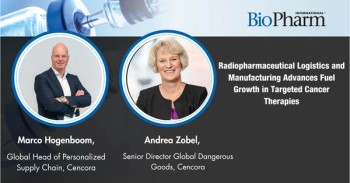
Andrea Zobel and Marco Hogenboom of Cencora World Courier discuss how advances in radiopharmaceutical manufacturing, cancer biology, and specialty logistics are enabling the expansion of targeted radiopharmaceutical therapies into larger patient populations and broader oncology indications.
New data presented at EHA 2026 showed promising efficacy and manageable safety for Imviva Biotech's investigational allogeneic CAR-T therapy CTD402 in pediatric and adult patients with relapsed or refractory T-cell acute lymphoblastic leukemia and lymphoblastic lymphoma.

Immunome has dosed the first patient in a Phase 1 clinical trial evaluating IM-1617, a potential first-in-class antibody-drug conjugate incorporating the company's proprietary HC74 topoisomerase I inhibitor payload. The study will assess safety and preliminary anti-tumor activity in patients with advanced solid tumors.
This week's BioPharm Brief highlights City Therapeutics' efforts to advance its RNAi pipeline with a new financing round, positive Phase 3 data for survodutide in obesity and MASLD, and Lilly's oral GLP-1 Foundayo outperforming oral semaglutide in a landmark head-to-head type 2 diabetes trial.

Kyowa Kirin will present new clinical and real-world evidence on mogamulizumab at the World Congress of Cutaneous Lymphomas, including patient-reported outcomes, comparative effectiveness analyses, biomarker findings, and treatment utilization data in relapsed or refractory mycosis fungoides and Sézary syndrome.

Sanofi has discontinued the Phase 3 MOBILIZE trial of riliprubart in treatment-refractory chronic inflammatory demyelinating polyneuropathy after an interim analysis found the study was unlikely to demonstrate sufficient efficacy. No new safety concerns were identified, and the company is evaluating the future of other ongoing riliprubart studies.
This week's BioPharm Brief highlights City Therapeutics' efforts to advance its RNAi pipeline with a new financing round, positive Phase 3 data for survodutide in obesity and MASLD, and Lilly's oral GLP-1 Foundayo outperforming oral semaglutide in a landmark head-to-head type 2 diabetes trial.

Eli Lilly reported Phase 3 data showing its oral GLP-1 receptor agonist Foundayo (orforglipron) achieved greater reductions in A1C and body weight than oral semaglutide in the first head-to-head trial of two oral GLP-1 therapies for type 2 diabetes.

City Therapeutics has secured $99.5 million in Series B financing to advance its next-generation RNA interference platform and pipeline, including its Phase 1 Factor XI-targeting candidate for thromboembolic diseases and a planned clinical-stage program for Stargardt disease.
Sanofi secured European approval for a subcutaneous formulation of Sarclisa in multiple myeloma, Pfizer expanded HYMPAVZI's FDA-approved use in hemophilia, and Johnson & Johnson agreed to acquire Firefly Bio to strengthen its KRAS-focused oncology pipeline.

Johnson & Johnson has agreed to acquire Firefly Bio in a $1 billion cash deal, gaining access to the company's Firelink degrader antibody conjugate platform for KRAS-driven cancers. The acquisition strengthens J&J's oncology pipeline and reflects continued industry interest in targeted protein degradation approaches for difficult-to-treat solid tumors.

The FDA has expanded the indication for Pfizer's Hympavzi to include pediatric patients ages 6 to 11 years and people with hemophilia A or B who have inhibitors. The approval makes Hympavzi the first subcutaneous non-factor therapy available for children ages 6 to 11 years with hemophilia B.
In this episode of The BioPharm Brief, we cover the FDA approval of Lupin's interchangeable ranibizumab biosimilar Ranluspec, a new iPSC cell therapy manufacturing partnership between Made Scientific and Pluristyx, and emerging research on TIGIT as a potential immunotherapy target in pancreatic cancer.

A Journal of Pancreatology review underscores renewed interest in TIGIT, but clinical evidence remains mixed across solid tumors.

The FDA has approved Lupin’s Ranluspec, an interchangeable biosimilar to Lucentis, for wet AMD, diabetic eye disease, and other retinal conditions.
Today's biopharmaceutical news highlights an FDA breakthrough designation in spinal muscular atrophy, an expanded oncology collaboration focused on tumor activated bispecifics, and a new biosimilar launch for retinal diseases in Europe.

Teva launches Ahzantive, an EMA-approved aflibercept biosimilar, in select European markets for wet AMD and other retinal diseases.

The FDA has granted Breakthrough Therapy Designation to Biogen's investigational antisense oligonucleotide salanersen for spinal muscular atrophy, supported by Phase 1b data showing motor function improvements and reduced neurodegeneration in children previously treated with gene therapy.
Daily biopharma update covering RNA exon editing licensing, gene therapy clinical data, and preclinical rare disease collaboration advances across the biotech sector.

IDefine and UT Southwestern will assess a preclinical EHMT1 gene replacement strategy for Kleefstra syndrome.

Lilly adds Ascidian’s RNA exon-editing platform for rare inherited kidney disease targets in a deal with no disclosed clinical data.

Interim phase 1b/2 data from Tenaya Therapeutics’ MyPEAK-1 study showed TN-201 gene therapy was generally well-tolerated and associated with improvements in cardiac remodeling, symptom burden, and functional measures in patients with MYBPC3-associated hypertrophic cardiomyopathy.¹
Today’s BioPharm Brief covers FDA draft guidance aimed at streamlining rare disease gene therapy development, Phase 3 trial updates involving dual survival endpoints in oncology programs, and Eli Lilly’s $1.2 billion licensing deal for a GLP-2 therapy in short bowel syndrome.

Eli Lilly has entered a licensing agreement with Hanmi Pharmaceutical for sonefpeglutide, a long-acting GLP-2 receptor agonist in Phase 2 development for short bowel syndrome. The deal includes $75 million upfront and up to $1.2 billion in milestone payments, plus royalties.

FDA draft guidance outlines how prior scientific knowledge may support gene therapy development for rare and life-threatening diseases.

From multifunctional antibodies and T-cell engagers to in vivo cell therapies and hepatitis B functional cures, the most important large-molecule therapies of 2026 reveal the technological trends driving the next generation of biologic medicines.