


Development
Latest News
Advertisement
Research into Cold Cancers Heating Up
Accurately targeted immunotherapies through reliable neoantigen recognition enable personalized medicine development.

Proprietary Cell-Line Development for High-Titer AAV Manufacturing
Proprietary cell lines offer opportunities for achieving high AAV titers.

Bracing for a Future Wave of Advanced Therapies
In the ATMP space, CGTs are hitting their stride with unprecedented approvals in the past year alone.

Latest Videos



Shorts

Advertisement
More News
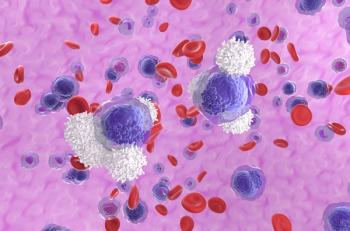
New data presented at EHA 2026 showed promising efficacy and manageable safety for Imviva Biotech's investigational allogeneic CAR-T therapy CTD402 in pediatric and adult patients with relapsed or refractory T-cell acute lymphoblastic leukemia and lymphoblastic lymphoma.

Immunome Doses First Patient in Phase 1 Trial of Potential First-in-Class ADC IM-1617 for Advanced Solid Tumors
Published: | Updated:
Immunome has dosed the first patient in a Phase 1 clinical trial evaluating IM-1617, a potential first-in-class antibody-drug conjugate incorporating the company's proprietary HC74 topoisomerase I inhibitor payload. The study will assess safety and preliminary anti-tumor activity in patients with advanced solid tumors.

FDA has approved Organon's tocilizumab-bavi (Tofidence) for CAR T-cell–induced CRS and hospitalized COVID-19 in adults and children aged 2 years or older.

Kyowa Kirin Highlights New Mogamulizumab Data in Cutaneous T-Cell Lymphoma at WCCL 2026
Published: | Updated:
Kyowa Kirin will present new clinical and real-world evidence on mogamulizumab at the World Congress of Cutaneous Lymphomas, including patient-reported outcomes, comparative effectiveness analyses, biomarker findings, and treatment utilization data in relapsed or refractory mycosis fungoides and Sézary syndrome.

According to Eli Lilly and Company, the extended dosing interval reduces maintenance injections to as few as 6 per year without required topical corticosteroids.

Sanofi has discontinued the Phase 3 MOBILIZE trial of riliprubart in treatment-refractory chronic inflammatory demyelinating polyneuropathy after an interim analysis found the study was unlikely to demonstrate sufficient efficacy. No new safety concerns were identified, and the company is evaluating the future of other ongoing riliprubart studies.

Eli Lilly reported Phase 3 data showing its oral GLP-1 receptor agonist Foundayo (orforglipron) achieved greater reductions in A1C and body weight than oral semaglutide in the first head-to-head trial of two oral GLP-1 therapies for type 2 diabetes.

City Therapeutics Advances RNAi Pipeline as CITY-FXI Enters Clinic and Stargardt Program Approaches IND
Published: | Updated:
City Therapeutics has secured $99.5 million in Series B financing to advance its next-generation RNA interference platform and pipeline, including its Phase 1 Factor XI-targeting candidate for thromboembolic diseases and a planned clinical-stage program for Stargardt disease.

Phase 3 data from Boehringer Ingelheim’s SYNCHRONIZE-1 and SYNCHRONIZE-MASLD trials meet their primary endpoints, with glucagon/GLP-1 dual agonism showing targeted metabolic fat reduction beyond body weight loss at 76 and 48 weeks.

Johnson & Johnson has agreed to acquire Firefly Bio in a $1 billion cash deal, gaining access to the company's Firelink degrader antibody conjugate platform for KRAS-driven cancers. The acquisition strengthens J&J's oncology pipeline and reflects continued industry interest in targeted protein degradation approaches for difficult-to-treat solid tumors.

The FDA has expanded the indication for Pfizer's Hympavzi to include pediatric patients ages 6 to 11 years and people with hemophilia A or B who have inhibitors. The approval makes Hympavzi the first subcutaneous non-factor therapy available for children ages 6 to 11 years with hemophilia B.

The approval is based on phase 3 non-inferiority data from the IRAKLIA study, making isatuximab the first anticancer therapy administered via an on-body injector in the EU.
AI-driven protein design, continuous-learning R&D platforms, mechanistic PK/PD modeling, and automated analytical workflows are now foundational tools reshaping how biopharmaceuticals are discovered, characterized, and delivered.

A Journal of Pancreatology review underscores renewed interest in TIGIT, but clinical evidence remains mixed across solid tumors.

The FDA has approved Lupin’s Ranluspec, an interchangeable biosimilar to Lucentis, for wet AMD, diabetic eye disease, and other retinal conditions.
Agilent’s Dr. Ganesh Bala explains how MAM-based LC–MS peptide mapping has become a foundational analytical tool for ADC and bioconjugate CQA monitoring in this Q&A piece.

Teva launches Ahzantive, an EMA-approved aflibercept biosimilar, in select European markets for wet AMD and other retinal diseases.

CytomX and Regeneron aim to deepen their joint effort to develop protease-activated bispecific immunotherapies designed to improve tumor selectivity and widen the therapeutic window in solid tumors.

The FDA has granted Breakthrough Therapy Designation to Biogen's investigational antisense oligonucleotide salanersen for spinal muscular atrophy, supported by Phase 1b data showing motor function improvements and reduced neurodegeneration in children previously treated with gene therapy.

IDefine and UT Southwestern will assess a preclinical EHMT1 gene replacement strategy for Kleefstra syndrome.

Lilly adds Ascidian’s RNA exon-editing platform for rare inherited kidney disease targets in a deal with no disclosed clinical data.

Interim phase 1b/2 data from Tenaya Therapeutics’ MyPEAK-1 study showed TN-201 gene therapy was generally well-tolerated and associated with improvements in cardiac remodeling, symptom burden, and functional measures in patients with MYBPC3-associated hypertrophic cardiomyopathy.¹

Eli Lilly has entered a licensing agreement with Hanmi Pharmaceutical for sonefpeglutide, a long-acting GLP-2 receptor agonist in Phase 2 development for short bowel syndrome. The deal includes $75 million upfront and up to $1.2 billion in milestone payments, plus royalties.

FDA draft guidance outlines how prior scientific knowledge may support gene therapy development for rare and life-threatening diseases.

From multifunctional antibodies and T-cell engagers to in vivo cell therapies and hepatitis B functional cures, the most important large-molecule therapies of 2026 reveal the technological trends driving the next generation of biologic medicines.
Advertisement
Advertisement