


Horizon announces new bioproduction outlicense deal with an unnamed partner for a minimum value of £500,000.
Horizon announces new bioproduction outlicense deal with an unnamed partner for a minimum value of £500,000.
Scientists from the Fred Hutchinson Cancer Research Center have developed a semi-automated benchtop system for the manufacture of gene therapy.
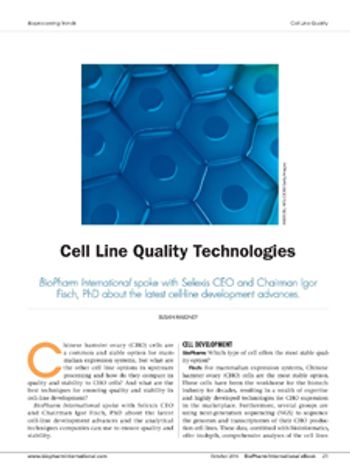
BioPharm International spoke with Selexis CEO and Chairman Igor Fisch, PhD about the latest cell-line development advances.
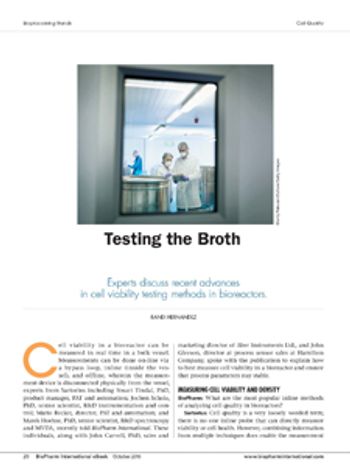
Experts discuss recent advances in cell viability testing methods in bioreactors.
WuXi AppTec’s new biomanufacturing facility is its third facility in the Philadelphia, PA Navy Yard.

A new virus-retentive membrane may be used to filter chemical-defined cell culture media for risk mitigation.
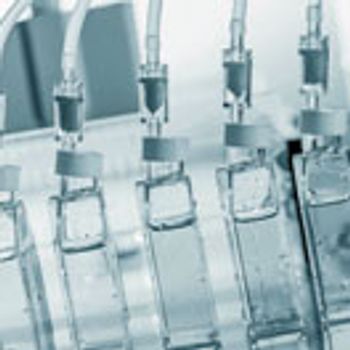
Advances in cell culture media technology have helped achieve safer biologics.

Quality, flexibility, and cost savings are driving use of perfusion technology in biosimilars manufacturing.
On July 25, 2016 Kite Pharma entered into an agreement with the University of California, Los Angeles, (UCLA) to advance development of off-the-shelf allogenic T-cell therapies from renewable pluripotent stem cells. The company entered into an exclusive license agreement with UCLA for an artificial thymic organoid (ATO) cell culture system. The ATO replicates the human thymic environment to support efficient ex vivo differentiation of T-cells from primary and reprogrammed pluripotent stem cells.
The collaboration will focus on the investigational candidate JTX-2011 and up to four other early-stage programs in immune-oncology.
GE further ramps up its cellular and gene therapy offerings with its acquisition of Biosafe, a cell processing solutions company.
A research team associated with Dr. Carl June announces it has discovered a way to engineer a patient’s own immune cells to recognize cancer-specific glycoantigens on tumor cells.
The first-ever use of CRISPR in humans will be evaluated by the National Institutes of Health during a meeting from June 21–22, 2016.
Results of a Phase II clinical trial reveal that stem-cell transplantation treatment following complete immune system destruction increases the duration of long-term remission in patients with multiple sclerosis.
Brammer Bio establishes late-phase development and commercial manufacturing facility for advanced cell and gene therapies in Lexington, MA.
The Cell and Gene Therapy Catapult released a review of their third annual survey of GMP cell and gene therapy facilities in the United Kingdom.
Data acquired from osmolality, glucose, and folic acid tests provides useful information for the specific identification of cell-culture media.
Early successes drive the need to overcome safety issues, increase efficacy, and address manufacturing challenges.
Developers of CAR-T cell therapies with products showing successful early-stage clinical results are currently seeking manufacturing capacity that will enable the production of the larger quantities of material needed for Phase III trials and eventual commercialization.
Cell therapy companies are attracting interest from investors, and drug companies are seeking partnerships and acquistions to accelerate development.
The National Institute of Health will conduct an internal review of the National Cancer Institute’s cell manufacturing facilities, which will affect multiple Kite projects.
Adheren relies on chemical modifications, rather than genetic engineering, to create its cell-based immunotherapies.
The pharma company revealed in a fourth quarter call that it will improve its cell-culture capabilities by focusing on the use of naïve, highly proliferative cells to manufacture its CAR-T drug candidate.

The authors describe the ways in which manufacturers can mitigate the risks related to the integrity of recombinant transgenes expressed in CHO cells.
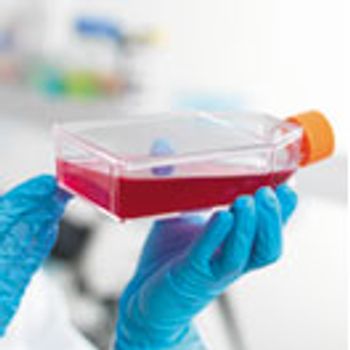
The necessity to detach cells from a culture substrate during cell harvesting remains one of the most challenging steps in a cell-culture process.