


Outsourcing method development offers multiple benefits to companies, including access to experience and expertise, streamlined costs, and development time efficiencies.
Accurately targeted immunotherapies through reliable neoantigen recognition enable personalized medicine development.
Proprietary cell lines offer opportunities for achieving high AAV titers.
In the ATMP space, CGTs are hitting their stride with unprecedented approvals in the past year alone.

Outsourcing method development offers multiple benefits to companies, including access to experience and expertise, streamlined costs, and development time efficiencies.
Developing and manufacturing a therapy in a regulated environment demands careful adherence to quality practices.

Under the terms of the agreement, Thermo Fisher will construct and operate a 44,000-ft2 cell therapy development, manufacturing, and collaboration center on UCSF's Mission Bay campus.
Bristol Myers Squibb has entered into a definitive agreement with Agenus for a global exclusive license to Agenus’ proprietary bispecific antibody program, AGEN1777, that blocks TIGIT and a second undisclosed target.
Charles River plans to enhance its gene therapy capabilities through the acquisition of Vigene Biosciences.
WuXi Biologics and WuXi STA have established a joint venture company named WuXi XDC to provide contract development and manufacturing of bioconjugates, including antibody-drug conjugates.

Recent CDMO partnerships include COVID-19 collaborations, manufacturing partnerships, service agreements, and a strategic alliance expansion.
Biogen and Capsigen have entered into a strategic research collaboration to engineer novel AAV capsids to deliver gene therapies that address the underlying genetic causes of various central nervous system and neuromuscular disorders.
Adolescents are now eligible for the Pfizer-BioNTech COVID-29 vaccine under expanded EUA.
Through the collaboration, MiNA will use its saRNA platform to research up to five targets selected by Lilly to address diseases across Lilly's key therapeutic focus areas.
Sterling Pharma Solutions and OncoTEX have entered into a clinical development agreement for the manufacturing of OncoTex’s novel platinum-resistant oncology drug candidate, OxaliTEX, for use in clinical trials.
The collaboration, which has been in place since 1998, will focus on drug discovery, translational medicine research, and pharmaceutical development.
Eli Lilly and Company has partnered with leading diabetes tech firms to offer app compatibility with insulin smart pens to streamline diabetes management with automated data collection.
AMRI will increase R&D and manufacturing capabilities for orphan and rare disease products.

Vaccine development is inherently challenging; however, in light of the COVID-19 pandemic, innovations have been prioritized, leading to accelerated development processes.
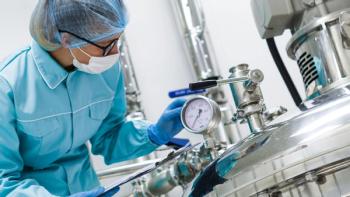
As downstream bioprocessing improvements continue, efforts are underway to integrate downstream processes into continuous operations.
As face masks start to come off, bio/pharma’s COVID-19 battle goes on.
This new collaboration between Vyant Bio, Ordaōs Bio, and Cellaria mitigates risk in the drug discovery process using artificial intelligence and in-vitro “avatar” clinical trials.
Merck has entered into non-exclusive voluntary licensing agreements with five Indian generic drug manufacturers for the development of molnupiravir, an investigational, oral antiviral agent for the treatment of non-hospitalized patients with confirmed COVID-19.
Since launching the partnership, Evotec and Bristol Myers Squibb have established a pipeline of novel first-in-class targeted protein degradation projects, two of which have transitioned into lead optimization.
DCAT’s annual bio/pharmaceutical development and manufacturing business event, DCAT Week, will take place virtually from July 12–16, 2021, with the in-person even postponed to March 20–24, 2022 in New York City.
Vertex and CRISPR have amended their collaboration agreement to include the development, manufacture, and commercialization of CTX001, an investigational CRISPR/Cas9-based gene editing therapy for sickle cell disease and transfusion-dependent beta-thalassemia.
Catalent plans to add cryogenic capabilities to its facility in Philadelphia, which will strengthen its ability to cryogenically preserve cell therapies and other biological materials.
This new technology could eliminate the need for cold chain storage, transport, and distribution of temperature-sensitive molecules.
FDA has accepted Airway’s investigational new drug application for the development of its novel human recombinant protein, AT-100 (rhSP-D), as a treatment for COVID-19.