TreeFrog Therapeutics announced that it will present new preclinical findings for TFG-001, an investigational 3-dimensional (3D) neural microtissue cell therapy for Parkinson’s disease, at an upcoming conference, with data suggesting early dopamine release and graft-derived reinnervation in translational models.¹
“These new results show robust, extensive reinnervation both in vitro and in vivo, across multiple preclinical models,” said Stephane Palfi, MD, PhD, professor of neurosurgery and head of neurosurgery at Henri Mondor Medical Center, Paris University, in a company press release.¹ Palfi added that the 3D format “has the potential to be a game-changer for the dopaminergic neural engraftment process,” while noting the next step is translation into the clinic.
Key facts
- Class: 3D neural microtissue cell therapy
- Indication: Parkinson disease
- Update: World Parkinson’s Conference poster
- Efficacy: Dopamine release by 48 hours
- Efficacy: Reinnervation in models
- Safety: No human safety data reported
- Status: CTA readiness planned for 2027
- Geography: France-based development program
The update remains preclinical, and no human safety or efficacy data for TFG-001 have been reported. However, the findings are relevant to a field in which several stem cell–derived dopaminergic progenitor programs are attempting to address a core limitation of symptomatic Parkinson’s disease treatment, which is replacement of dopaminergic function rather than pharmacologic supplementation alone.²
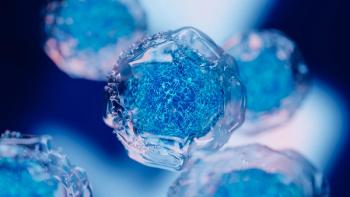
TFG-001 is being developed as a 3D dopaminergic neural microtissue composed of progenitors and neurons. According to TreeFrog, the product is intended to enhance posttransplant integration by delivering a preorganized neural network rather than a single-cell suspension. The company reported dopamine release as early as 48 hours in preclinical testing and said in vivo models showed graft integration and reinnervation of target brain regions.¹
The company also reported functional motor recovery at approximately 13 weeks in preclinical models, comparing that timing with 17 to 28 weeks reported for benchmark investigational cell therapies.¹ Such cross-program comparisons are difficult to interpret because models, dosing, cell composition, grafting methods, and outcome measures vary across studies.
Published work with human embryonic stem cell–derived midbrain dopamine progenitors has shown that grafted cells can survive, mature, innervate striatal targets, and improve motor deficits in animal models, but these findings have not established comparative efficacy among products.³,⁴
Parkinson’s disease is a progressive neurodegenerative disorder characterized by loss of dopaminergic neurons in the substantia nigra and dysfunction of basal ganglia circuits that regulate movement. Standard treatments, including levodopa and dopamine agonists, can improve motor symptoms but do not replace lost nigrostriatal neurons or halt disease progression.² Advanced therapies such as deep brain stimulation and infusion-based dopaminergic approaches may improve selected symptoms in appropriate patients, but regenerative strategies remain investigational.²
The rationale for cell therapy in Parkinson’s disease lays in the potential for transplanted dopaminergic cells to restore local dopamine signaling in the striatum. For a graft to be clinically meaningful, transplanted cells must survive, mature into the intended neuronal phenotype, release dopamine, and form appropriate connections with host tissue. TreeFrog’s announcement focuses on that reinnervation requirement, with the company stating that TFG-001 produced extensive graft-derived reinnervation across in vitro and in vivo models.¹
Preclinical programs in the field have taken several approaches to cell source and product design. For example, MSK-DA01, a human embryonic stem cell (hESC)–derived midbrain dopamine progenitor product, demonstrated preclinical efficacy and safety in animal models, including graft survival and behavioral improvements.³ Another hESC-derived dopaminergic progenitor program reported dose-ranging and preclinical safety data supporting clinical evaluation in Parkinson’s disease.⁴ These studies provide context for TreeFrog’s program but do not directly validate TFG-001, which uses a distinct 3D microtissue format and manufacturing approach.
Manufacturing is another central issue for dopaminergic cell therapy development. TreeFrog said TFG-001 is produced using its C-Stem platform, described as a closed, bioreactor-based capsule system intended for scalable cell expansion and differentiation under good manufacturing practice-compliant conditions.¹ Scalable production, batch consistency, cryopreservation, surgical delivery, immunosuppression strategy, and long-term graft monitoring are among the practical hurdles that will influence whether preclinical cell therapy programs can advance successfully into clinical development.
TreeFrog said TFG-001 is expected to be ready for a clinical trial application in 2027 and that the company is exploring co-development and commercialization options.¹ The company’s poster, titled “Advancing neural microtissues toward a clinically viable cell therapy for Parkinson’s disease,” is scheduled for presentation at the upcoming World Parkinson’s Conference.¹
The primary limitation of the announced data is that the data have not yet been evaluated in patients. The company did not disclose detailed quantitative efficacy results, animal numbers, statistical analyses, graft durability, immunologic findings, or adverse pathology outcomes at this time. Those details will be important for assessing translational readiness, especially given historical concerns in the field about graft composition, ectopic growth, dyskinesia, and variability in functional outcomes.
TFG-001 adds to a growing preclinical pipeline of pluripotent stem cell–derived dopaminergic therapies designed to move beyond symptomatic dopamine replacement. The central question for the program is whether the reported early dopamine release and reinnervation in models can translate into durable clinical benefit with acceptable safety in patients with Parkinson’s disease.
References
- TreeFrog Therapeutics. TFG-001, a novel 3D neural microtissue cell therapy, demonstrates superior functionality and reinnervation for Parkinson’s disease. Published May 25, 2026. Accessed May 26, 2026. https://treefrog.fr/2026/05/25/tfg-001-a-novel-3d-neural-microtissue-cell-therapy-demonstrates-superior-functionality-and-reinnervation-for-parkinsons-disease/
- Kalia LV, Lang AE. Parkinson’s disease. Lancet. 2015;386(9996):896-912. doi:10.1016/S0140-6736(14)61393-3
- Piao J, Zabierowski S, Dubose BN, et al. Preclinical efficacy and safety of a human embryonic stem cell-derived midbrain dopamine progenitor product, MSK-DA01. Cell Stem Cell. 2021;28(2):217-229.e7. doi:10.1016/j.stem.2021.01.004
- Park S, Park CW, Eom JH, et al. Preclinical and dose-ranging assessment of hESC-derived dopaminergic progenitors for a clinical trial on Parkinson’s disease. Cell Stem Cell. 2024;31(1):25-38.e8. doi:10.1016/j.stem.2023.11.009