

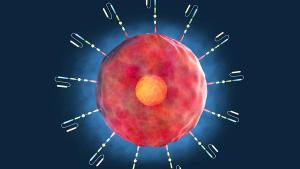



The new automated service connects companies with biologics development and manufacturing services.
The new automated service connects companies with biologics development and manufacturing services.
Top of CDER’s to-do list for 2020 is tracking adverse events more effectively and combating the opioid crisis.
Through the agreement, Eli will expand its immunology pipeline with lebrikizumab, Dermira’s novel, investigational, monoclonal antibody designed to bind interleukin-13 with high affinity.
The approval comes after the results of a clinical trial that showed 61% of patients had a response lasting six months or longer.
The therapy is currently approved in the EU as a gene therapy for the treatment of patients 12 years and older with transfusion-dependent β-thalassemia.
The approval was based on successful data from a years-long trial that assessed patient’s tumor status every 12 or 24 weeks for up to 24 months.
The trial will test experimental stem-cell treatments against biologic therapies for severe forms of relapsing multiple sclerosis.
The companies will kick off their partnership with CPhI North America, a conference that hosts the North American pharmaceutical supply chain.
The new business unit, as well as a new leadership team formed by AbbVie, will be effective upon closing of the acquisition in the first quarter of 2020.
The company has various projects and launches scheduled for 2020 as part of its anniversary celebration.
Tim Howard will assume the role of acting ISPE CEO and president after John Bournas steps down from the positions.
Under the agreement, Almirall will leverage WuXi Biologics’ proprietary WuXiBody platform to develop bispecific antibodies for dermatological diseases.
The event is set to take place from Feb. 23–26, 2020 at the Bethesda North Marriott in North Bethesda, Maryland.
Roche will apply ProBioGen’s proprietary GlymaxX technology to boost the antibody-dependent cellular cytotoxicity activity of antibodies.
The joint venture will develop next-generation cell and gene therapies incorporating Affimer proteins.
Catalent completes purchase of biologics fill-finish and oral solid dose facility in Anagni, Italy
The new GMP conditioning product offering is designed to support clinical phase and commercialization stages of cell and gene therapy production.
The Ireland-based company can now offer complete elemental impurities testing services.
The numbers of new molecular entities approved in 2019 are close to or exceed FDA’s performance in most previous years.
The agency sent a warning letter to Henan Kangdi Medical Devices Co. Ltd after an inspection found CGMP violations that included a variety of failures of the company’s quality unit.
Boehringer Ingelheim Biopharmaceuticals China is the first company to apply the adopted Marketing Authorization Holder system within the revised Chinese Drug Administration Law through its partnership with BeiGene for its monoclonal antibody, tislelizumab.
Catalent’s planning service is designed to assist in evaluating needs for launching and maintaining clinical trials.
FDA sent a warning letter to GPT Pharmaceuticals Pvt. Ltd. after inspectors found CGMP violations that included equipment that was not properly maintained.
Sartorius and the German Research Center for Artificial Intelligence have established a research laboratory for AI in the biopharmaceutical industry.
By consolidating legacy buildings, Colorcon enhances environmental and production efficiencies at West Point, PA facility.
The new scientific advisory board will oversee innovation projects, identify and develop key new technologies, and be responsible for forming high-caliber alliances with innovative start-ups.
FDA sent a warning letter to Dercher Enterprises, Inc., DBA Gordon Laboratories, for CGMP violations and adulterated drug products.
The guidance describes procedures for obtaining an additional National Drug Code for prescription drugs imported into the United States.
The European Medicines Agency and its European partners have launched a pilot program for cooperation in the inspection of facilities that manufacture sterile drug products.
The acquisition expands Charles River’s scientific capabilities in cell therapy development.