


The bioinformatics industry is currently one of the fastest growing fields in India's biotechnology sector. Indian IT companies have several advantages in the bioinformation field and can continue to grow their opportunities worldwide.

Eric Langer has over 25 years experience in biotechnology and life sciences strategic marketing management, market research, and publishing. He has held senior management and marketing positions at biopharmaceutical supply companies. He has published and authored many books and reports on topics in Biotechnology, Large-scale BioManufacturing, and bioscience commercialization and communication. He teaches at Johns Hopkins University marketing management, biotech marketing, services marketing, and marketing in a regulated environment. In 1989 he co-founded BioPlan Associates, Inc. to provide market analysis, and strategy to biotech and healthcare organizations.
The bioinformatics industry is currently one of the fastest growing fields in India's biotechnology sector. Indian IT companies have several advantages in the bioinformation field and can continue to grow their opportunities worldwide.

India's biopharmaceutical industry, which was relatively modest only a decade ago, is expected to generate almost $2 billion in sales in 2008, making it one of the largest biopharmaceutical segments in Asia.1 According to BioPlan Associates, Inc., and the Society for Industrial Microbiology's newly published joint study, Advances in Biopharmaceutical Technology in India, the Indian biopharmaceutical industry is growing 25 to 30% per year.1

China's pharma industry represents 5% of the world total. By 2010, China is expected to become the world's fifth largest pharmaceutical market.
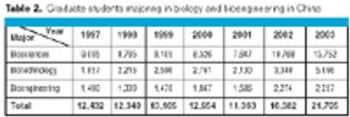
Biotechnology is definitely a hot topic in China-the country's administrators recently identified it as a "cornerstone of China's national economy by 2020." But most realize that getting there will require a better trained, specialized workforce than currently exists. The Chinese government has been pumping money into life sciences education as part of its plan to achieve a global biotechnological presence over the next 15 years.
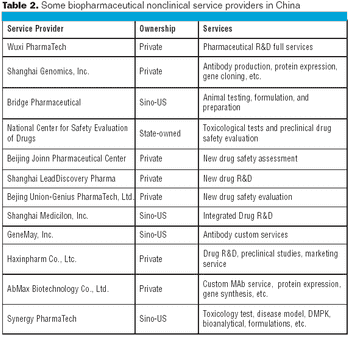
Most Chinese biopharmaceuticals are relatively small and there are not enough of them to sustain a robust services sector.